




Hey there, fellow Canadians!
So, you’ve got an electric scooter—or maybe you’re thinking about getting one—but before you hit the road, do you know your local regulations?
E-scooters have skyrocketed in popularity since 2019, offering an alternative to cars, public transit, and, let’s be honest, sitting in traffic. As more riders take to the streets, governments have responded by implementing regulations to ensure safety. While e-scooters are gradually gaining legal acceptance, the rules vary widely across provinces and cities.
With laws constantly evolving, staying up to date is key—because the last thing you want is a fine or, worse, having your scooter confiscated. So, what do you need to know in 2026? Let's break it down province by province.
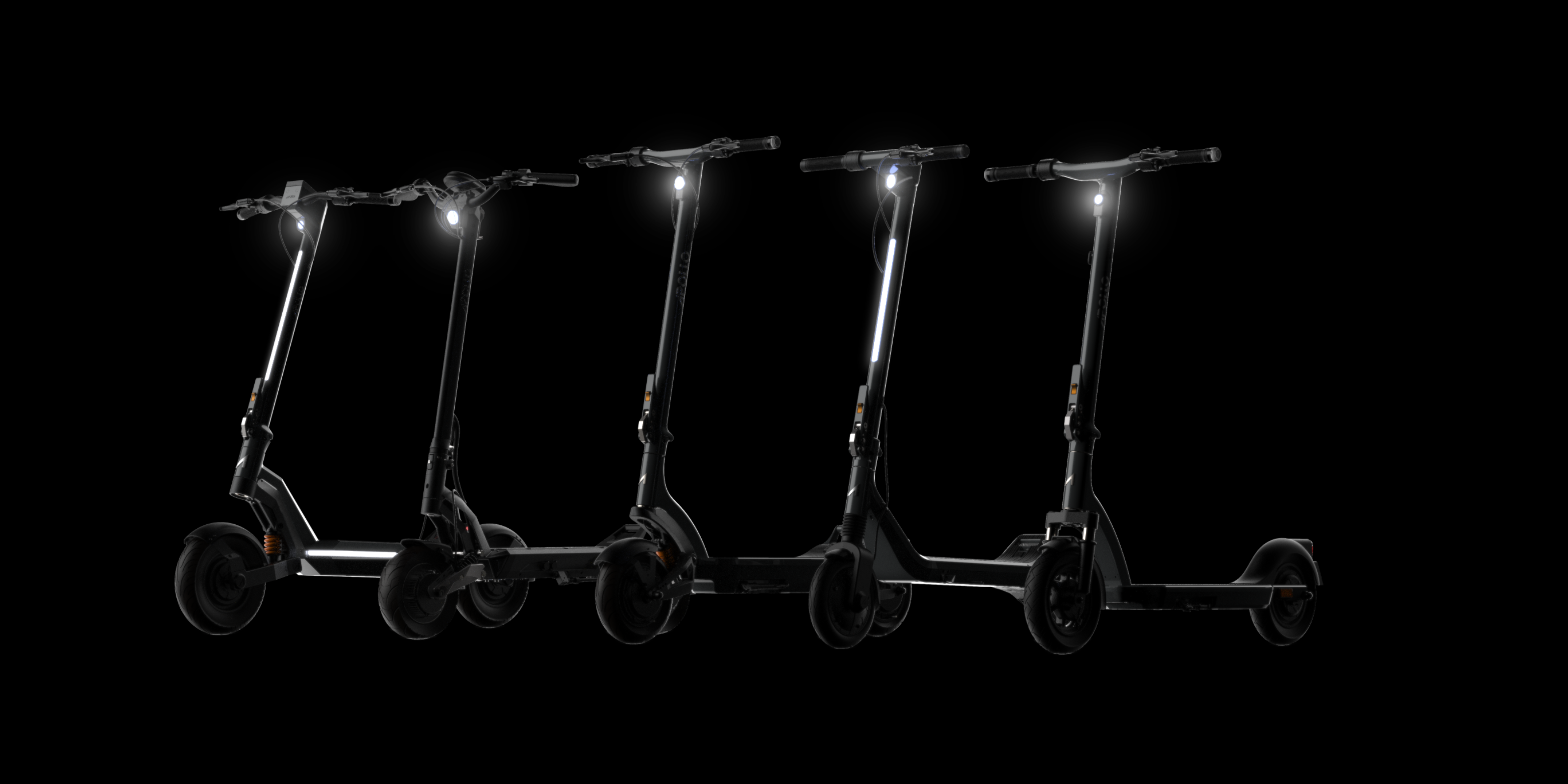
Check it out -> Apollo Commuter Scooters our scooters made specifically for commuting needs. Find the one that fits your lifestyle best.
Provincial & City-Specific E-Scooter Laws
British Columbia
B.C.’s Electric Kick Scooter Pilot Project runs until April 2028. The key rules include:
✅ Riders must be 16 or older
✅ Helmets are mandatory
✅ E-scooters allowed on roads with speed limits of 50 km/h or less and in designated bike lanes
✅ Lights and bells required for night riding
Learn more: BC Government – E-Scooter Safety

Vancouver
As part of the pilot project, Vancouver allows e-scooters on local streets and protected bike lanes, but not on sidewalks, major roads, or the Seawall. Other key rules:
🚦 Max speed: 25 km/h
🛑 Helmet required
🔦 Working brakes and lights for nighttime riding
Learn more: City of Vancouver – Electric Kick Scooters
Ontario
Ontario launched its E-Scooter Pilot Program on January 1, 2020, and it’s now proposed to extend until November 27, 2029. However, each municipality has set their on specific rules. The provincial baseline:
✅ Riders must be 16+ years old
✅ Max speed: 24 km/h
✅ Helmets required for riders under 18
Learn more: Ontario.ca – Electric Kick-Style Scooters
Toronto
Unfortunately, Toronto remains a no-go for e-scooters on public roads, bike lanes, and sidewalks. Right now, they can only be ridden on private property. However, some municipalities in Ontario do allow e-scooters, so be sure to check your local bylaws!
Learn more: City of Toronto – E-Scooters

Ottawa
Ottawa opted into Ontario's pilot with some stricter local rules:
🚴 Ride on multi-use pathways, cycling lanes, and roads (50 km/h or lower)
🚫 No riding on sidewalks or NCC pathways
⚡ Max speed: 20 km/h (stricter than provincial 24 km/h)
🚷 Only one rider per scooter
💰 Fines for breaking these rules start at $150 for sidewalk riding
Learn more: City of Ottawa – E-Scooters
Quebec
Quebec has been running a pilot program for motorized personal mobility devices (ATPMs) since July 2023, allowing e-scooters on bike paths and roads with a 50 km/h speed limit. The pilot was set to run until July 2026—an extension is expected, but riders should check the SAAQ website for the latest status.
Learn more: Gouvernement du Québec – Electric Scooters
Montreal
Montreal has some of the most detailed e-scooter regulations in the country:
- ✅ 14+ years old to ride (riders aged 14–17 must carry valid ID)
- Helmets are mandatory
- ✅ Max speed: 25 km/h
- ✅ Night riding requires a front white light, a red rear light, and working brakes
- 💰 Fines of up to $200 for breaking the rules
💡 Remember to Ride Safe at Night! Here are some tips we put together for you.
Alberta
⚠️ Important: Under Alberta's Traffic Safety Act, privately-owned e-scooters are not permitted on public roads, sidewalks, or pathways. This applies province-wide. Municipalities like Calgary and Edmonton have pushed for legislative changes, but as of 2026 the law hasn't changed for personal ownership.
Calgary & Edmonton
Both cities have shared rental e-scooter programs (Bird, Lime, Neuron) that operate under special municipal exemptions. If you want to ride legally in either city right now, rentals are your only public option.
-
✅ Rental riders must be 18+
-
✅ Helmet strongly recommended
-
✅ Max speed: 20 km/h
-
🚫 No riding on sidewalks
-
🚫 Private/personal e-scooters not permitted on public property
Learn more: City of Edmonton – Shared Micromobility
Provincial Scooter Laws At A Glance
Rules change frequently — always verify with your local government before riding.
|
City / Province |
Status |
Min. Age |
Max Speed |
Helmet |
Where You Can Ride |
|---|---|---|---|---|---|
|
Vancouver, BC |
✅ Legal |
16+ |
25 km/h |
Mandatory |
Bike lanes, local streets (no sidewalks, no Seawall) |
|
Ontario (prov.) |
✅ Legal (pilot) |
16+ |
24 km/h |
Under 18 only |
Varies by municipality — check local bylaws |
|
Toronto, ON |
🚫 Banned |
— |
— |
— |
Public roads/lanes/sidewalks all prohibited |
|
Ottawa, ON |
✅ Legal (pilot) |
16+ |
20 km/h |
Mandatory |
Multi-use pathways, cycling lanes, roads ≤50 km/h |
|
Montreal, QC |
✅ Legal (pilot) |
14+ |
25 km/h |
Mandatory |
Bike paths, roads ≤50 km/h |
|
Calgary, AB |
🟡 Rentals only |
18+ |
20 km/h |
Recommended |
Bike lanes, pathways (rental e-scooters only) |
|
Edmonton, AB |
🟡 Rentals only |
18+ |
20 km/h |
Recommended |
Cycle paths, roads ≤50 km/h (rental e-scooters only) |
🟡 Rentals only = privately-owned e-scooters are not permitted on public property under provincial law. | ✅ Legal (pilot) = rules may change — check for updates.
FAQ
Q: Do I need a license to ride an electric scooter in Canada?
In most provinces with active pilot programs — including BC, Ontario, and Quebec — no driver's license is required for standard e-scooters (≤500W, ≤32 km/h). However, Quebec riders aged 14–17 must carry valid ID. Higher-powered scooters may be classified as mopeds and require licensing, registration, and insurance, so always check your scooter's specs against your province's rules.
Q: Is it legal to ride an electric scooter in Canada?
It depends on where you live. BC, Ontario (outside Toronto), and Quebec currently allow e-scooters under pilot programs. Toronto bans them outright on public property. In Alberta, privately-owned e-scooters are prohibited on public roads — only rental programs operate legally in Calgary and Edmonton. Laws are evolving, so always check your local government's website before you ride.
Q: Do I need to wear a helmet to ride an e-scooter in Canada?
Helmet rules vary by province. In Quebec (including Montreal), BC, and Ottawa, helmets are mandatory for all riders. In Ontario, helmets are required for riders under 18. In Alberta rental programs, helmets are strongly recommended but not legally required. Either way — wear one. Check out Apollo's helmet range if you need to gear up.
Q: Can I ride my electric scooter on the sidewalk?
No — sidewalk riding is banned in virtually every Canadian city with e-scooter rules. You'll typically be allowed on bike lanes, multi-use pathways, and roads with speed limits of 50 km/h or lower, depending on your province. Fines for sidewalk riding can range from $100 in Quebec to $150+ in Ottawa.
Q: What's the speed limit for electric scooters in Canada?
It varies by location: 25 km/h in Vancouver and Montreal, 24 km/h under Ontario's provincial pilot, and 20 km/h in Ottawa and Alberta rental programs. Apollo scooters can be speed-limited through the app to keep you compliant wherever you ride.
Q: Can I ride my e-scooter at night?
Yes, in most places — but your scooter needs to be properly equipped. BC, Quebec, and Montreal all require a front white light, a rear red light, and working brakes for nighttime riding. Apollo scooters come with built-in lighting designed to meet these requirements.
Q: What happens if I break e-scooter rules in Canada?
Fines vary by city: Montreal can fine riders up to $200, Ottawa starts at $150 for sidewalk riding, and Quebec sets a minimum fine of $100 for most violations. Beyond fines, repeated offences or dangerous riding can result in your scooter being confiscated. Riding responsibly protects you, other road users, and the broader e-scooter movement.
Q: Are e-scooter laws the same across Canada?
Not even close. Canada has no single national e-scooter law — rules are set at the provincial level, and cities can add their own restrictions on top. Toronto bans e-scooters entirely. Alberta prohibits private ownership on public roads. BC and Ontario run pilot programs with different rules. Always check the specific bylaws for your city, not just your province.
Q: I'm thinking about buying an electric scooter in Canada. What should I know?
First, check that e-scooters are legal where you live and confirm the rules for speed limits, age, and where you can ride. Then look for a scooter that fits within your province's specs — typically ≤500W and configurable to ≤25 km/h. Apollo scooters include app-based speed limiting, IP66 weather protection, and built-in lighting, making them well-suited for Canadian conditions. Browse Apollo's full lineup to find the right fit for your commute.
Stay Legal & Ride Smart
E-scooter laws in Canada are constantly evolving, with different rules for every city and province. Whether you're commuting, running errands, or just cruising for fun, staying informed is key to a smooth (and legal) ride.
⚡ Check local regulations frequently, as they can change!
⚡ Apollo’s app lets you adjust your scooter’s speed to stay within legal limits, keeping you safe and compliant.
⚡ Follow the rules, ride responsibly, and keep the e-scooter movement growing!
Want to stay updated on all things electric scooters? Subscribe to our blog and follow us on YouTube for the latest news, tips, and riding guides.
Safe riding, and see you on the road! 🛴💨