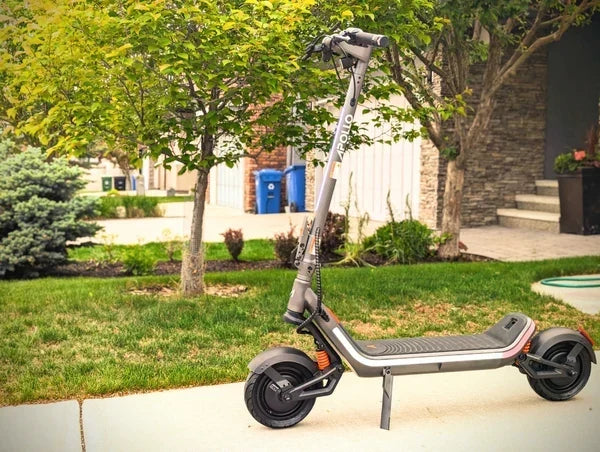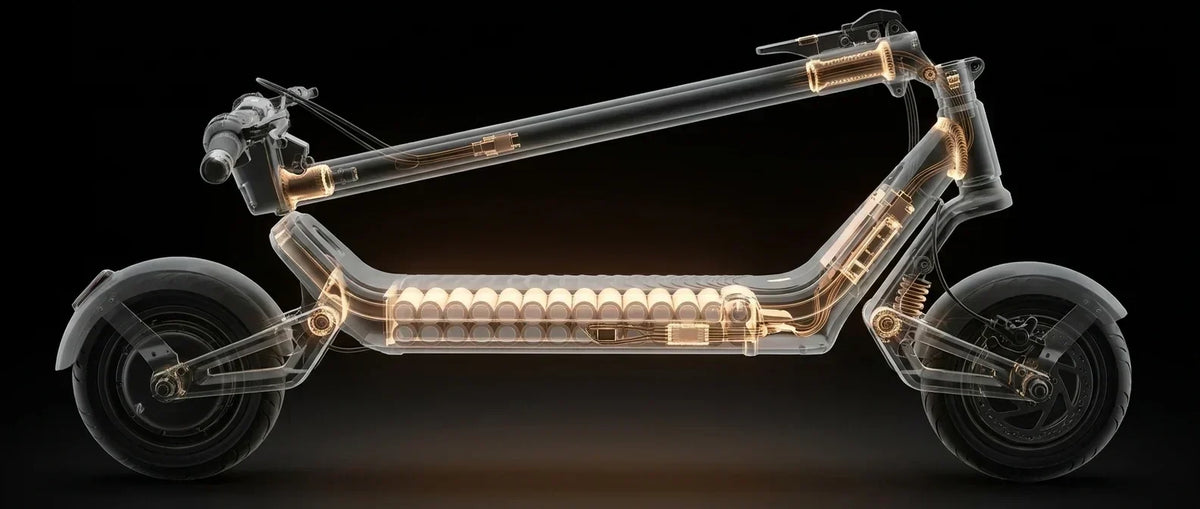




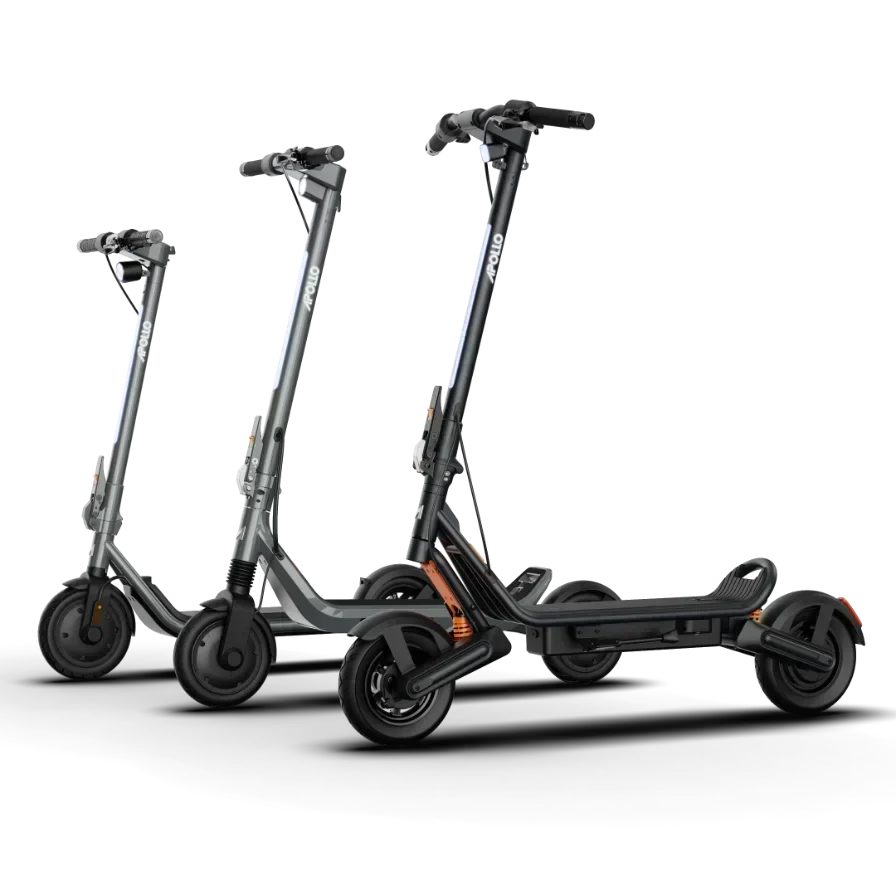
Whether you live on campus or commute in, an electric scooter can be an ideal way to get around. Here's how to figure out if it's right for you, and how to pick the model that actually fits your use case.
Is an electric scooter a good option for college transportation?
For many students, yes. Electric scooters are affordable, aren't subject to often-substantial parking permit fees, skip the hunt for a parking space entirely, and can get students and employees to campus locations that aren't easily reached by other transportation methods. They also offer a riding experience that other transportation options simply can't match.
Before getting into all the positives, in the interest of a balanced picture, here are a couple of things worth weighing first.
Some campuses restrict where you can ride
Some campuses ban PEVs (electric bikes and scooters) outright, and some ban all personal wheeled vehicles, including skateboards, bicycles, e-bikes, and both electric and manual scooters. That said, this usually doesn't prevent commuting to and from campus by scooter, it just means the scooter (or other device) can't be ridden within campus boundaries, though it can still be walked.
Weather can limit ride days
Harsh weather conditions can limit the days when an electric scooter is the preferred way to get around. That includes significant rain events or snow/ice conditions, where even with the right gear, road and path conditions can become a real safety issue.
How do I choose the right electric scooter for campus use?
Electric scooters are a great campus transportation option overall, but student (and employee) needs vary a lot. Start with a needs assessment: make a checklist of what you need your scooter to do for you and then choose a scooter that actually meets those needs. Price point isn't the only reason there are so many scooter models on the market to fit multiple riding needs.
Needs assessment: questions to ask yourself
-
Is the scooter for on-campus use only, or also for commuting to and from campus or off-campus locations? (Think your max riding distance in one ride)
-
How rough are the roads or paths the scooter will be used on?
-
How steep and long are the hills on your route?
-
Will the scooter need to be carried up and down stairs?
-
Where can the scooter be stored, locked, and charged?
-
What's your budget?
-
Will you also use it recreationally, or during summer break?
Once you've answered these, you should have a fairly clear idea of what role the scooter will play and be able to make an effective choice between the options out there. Let's go through each one and consider how it should shape a purchasing decision.
On-campus only, or commuting to and from?
This is really a question about range and capability. If your use is very localized, range, speed, and even suspension won't be a high priority. In this case you should be looking for something lighter, portable, and easy to store. However, if you're commuting to and from campus, or to off-campus locations, more speed, range, and suspension can quickly become must-have items.
A lightweight, modest-range scooter can be had at low cost, and plenty of options exist. But a cheap scooter can also be an invitation to breakdowns, or even failures that cause an accident. After-sales support, repair help and parts availability, can be limited or nonexistent with cheap electric scooters.
How rough are the roads and paths?
This will largely determine whether you need suspension, and how robust it needs to be. As a rough guide: (a) smooth roads/paths with legal speeds under 15–20 mph, (b) mostly smooth roads/paths with legal speeds under 25 mph, (c) some surface issues and higher speeds, often above 20 mph. As conditions move from (a) to (c), the need for robust suspension increases. This is not only for comfort, but for the scooter's longevity and the rider's safety.
How steep are the hills?
Hill steepness, along with rider weight and desired speed, is a key factor in the power a scooter needs. Depending on the steepness of the hills you’re planning to take on, it may mean buying a dual-motor instead of a single motor.
Will you need to carry it up and down stairs?
If stair-carrying is a requirement, that puts a real weight limit on which models make sense. The fastest, most powerful scooter isn't much use if you can't get it up to (and out of) your dorm room or apartment to actually ride it.
Where will you store and charge it?
A safe, weather-protected storage and charging spot matters. You'll need an AC outlet, and the location should stay dry, both for the scooter's longevity and for safe use of an AC charger. It should also avoid low or freezing temperatures, batteries don't perform well near freezing, and should never be charged in those conditions.
What's the actual cost, compared to parking?
As with any purchase, budget matters. Fortunately, compared to other modes of transport, scooters are a good value. For most commuting needs (including ones that call for dual motors, strong power, good suspension, and long range) the acquisition cost will land under $2,000, with plenty of quality models available for less demanding use cases at a considerably lower cost.
It's worth weighing this against the cost of a parking permit. At the University of California, Irvine (a genuinely ideal campus for scooter use) a resident parking permit currently runs $150 a month (2025–2026 rate). A scooter well suited to getting a student around campus and the surrounding community can be purchased for roughly the cost of a single year of that parking permit and it may well last all four years of an undergraduate degree. That's on top of savings on insurance and maintenance versus a car.
Which Apollo scooter fits your college use case?
Apollo makes scooters across most of the price-to-performance spectrum, but Apollo doesn't make cheap scooters. The entry-level Dash sells for $800 USD (occasionally as low as $650 on sale) inexpensive, but not cheap. What that gets you is a well-engineered machine with quality parts and first-rate engineering, backed by a North American company with service centers, parts availability, and a North American-based technical support team. Even the Dash carries UL safety certification, IP66 weather sealing, a full suite of smart scooter features, and a genuinely good iOS and Android app with Find My and NFC for security and peace of mind. Those high-end features carry through the entire Apollo lineup.
For most college users, something in Apollo's commuter line will almost always meet or exceed their needs. If size and weight aren't a concern, and budget allows, a performance scooter can add some thrill potential and may be worth considering if your pavement or path surfaces (or your weight) call for the most robust suspension available, and stairs aren't in the picture.
Here's a rundown of the commuter-line scooters, mapped to the needs-assessment questions above.
Apollo Dash — from $849 (as low as $699 on sale)

Highlights: Lightest weight, easy to transport in cars, easy to carry up and down stairs, lowest cost, still full-featured.
Limitations: No suspension, lowest power and range, single motor.
Apollo Go

Highlights: Still quite light, dual motor, has suspension, attractive price.
Limitations: Not as powerful as the Stellar version, less effective lighting, lacks Find My and NFC security.
Apollo Go Stellar

Highlights: A lot of scooter in a small package. Enough power, speed, range, and suspension for most commuters. All the positives of the Go plus full smart-scooter functionality (Find My, NFC, app), better lighting, more power, and slightly better range and speed.
Limitations: A bit more expensive and slightly heavier than the Go.
Apollo City 2.0 — new for '26–'27

Highlights: A total refresh of the City line — this is the single-motor version. Good range, lower weight than the dual-motor version, full smart-scooter functionality (Find My, NFC, app), outstanding lighting, elegant design, plush suspension, and stable steering geometry.
Limitations: Heavier than the Go series and the 2024 City. Costs more than the heavily discounted dual-motor 2024 City. Less power and hill-climbing capability than the Stellar version.
Apollo City 2.0 Stellar — new for '26–'27

Highlights: A total refresh of the City line — this is the dual-motor version. Good enough to be considered a performance scooter. Full smart-scooter functionality (Find My, NFC, app), outstanding lighting, elegant design, plush suspension, and stable steering geometry.
Limitations: Increased cost and weight over the Go series, the 2024 City, and the single-motor City 2.0. Costs more than the heavily discounted dual-motor 2024 City. Weight likely rules out stair-carrying for all but the strongest riders.
Explore 2.0

Highlights: A capable scooter that's more affordable than comparable models in the Apollo line — good value on a quality build. Full smart-scooter feature set, full suspension, quality components.
Limitations: Single motor, less range and speed than the single-motor City 2.0, lighting not quite as nice as the City 2.0 (but still quite good).
Explore 2.0 Stellar
Coming in 2027
Highlights: A very capable, performance-grade scooter at an affordable price point. All the smart features of the 2.0 line, 360-degree lighting, dual motor.
Limitations: Weight won't accommodate stairs, still a significant cost, and won't be shipping in time for the fall 2026 semester.
Don't overlook scooter and personal safety
Protecting the scooter
Safety for your scooter starts with a secure place to lock it up, both where you live and where you go to class. Use a proper lock, and make it a priority to choose a scooter with anti-theft electronics app-based or NFC locking, plus a location feature like Apple Find My or IoT cellular GPS. Keep in mind that in some locations, theft rates are high enough that an unsupervised scooter left in the open may get stolen regardless of how good the locks are. Where possible, it's best to keep it with you.
Proper maintenance matters for the longevity of a scooter and its components and it can also help a rider avoid an accident. Check tire pressure, part wear, and that bolts and connectors are properly fitted and tight, on a regular basis.
Protecting yourself
Always wear proper riding gear: a quality helmet, high-visibility clothing, weather-appropriate clothing, and often gloves to protect your hands in case of a fall. Consider the safety of your surroundings too, is the route free of collision risks and potentially unsafe areas? Plan routes accordingly.
Frequently Asked Questions
Are electric scooters a good option for college students?
For most students, yes. They're affordable, avoid parking permit fees and the hunt for a spot, and can reach campus locations other transport can't. The main caveats are campus riding bans (which don't usually block commuting to campus) and reduced usability in heavy rain, snow, or ice.
Can I ride an electric scooter on campus?
It depends on the school. Some campuses ban PEVs, including e-scooters, e-bikes, and sometimes all wheeled personal transport. This typically only restricts riding within campus boundaries, a scooter can usually still be walked on campus and ridden for the commute to and from it. Always check your specific campus policy.
How much does a college commuter electric scooter cost compared to parking?
A quality commuter scooter suited to most college use cases typically costs under $2,000, and often well under that. At UC Irvine, for comparison, a resident parking permit runs $150 a month as of the 2025–2026 rate, meaning a scooter can pay for itself against a single year of parking, and often lasts multiple years beyond that.
What features matter most in a college electric scooter?
It depends on your use case: range and suspension matter more if you're commuting long distances or over rough roads; motor power matters more on hilly routes; low weight matters if you need to carry it up stairs; and anti-theft features (app-based locking, Find My, NFC, GPS) matter in any high-theft area.
Which Apollo scooter is best for a college student?
For most students, Apollo's commuter line (Go, Go Stellar, City 2.0) covers the range of needs from lightweight and affordable to full-featured with strong hill-climbing performance. The Dash is the lightest, most affordable, stair-friendly option; the City 2.0 Stellar suits students who want performance-level power and don't need to carry it upstairs.
Prices, specs, and shipping timelines reflect information current as of mid-2026 and are subject to change. Always confirm current pricing and availability on Apollo's website before publishing or purchasing.