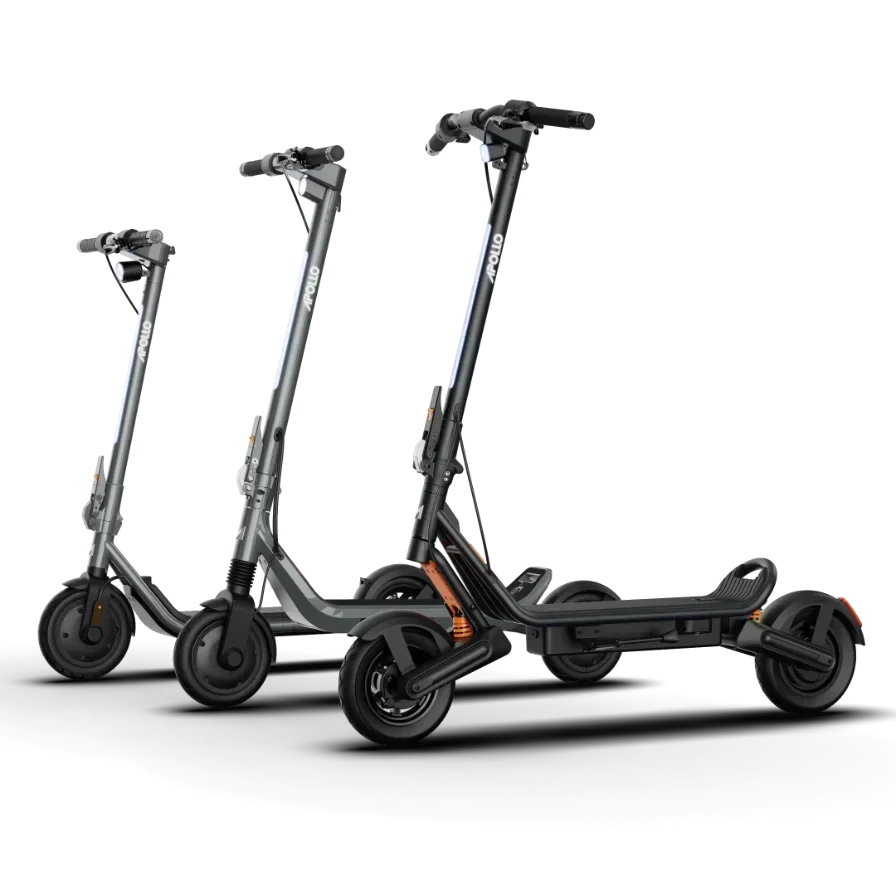




Fleet data tells us that most scooter rides (above 80%) are fairly short in distance and duration. 5 miles or less each way and under 30 minutes. However, Apollo Scooters can go further and faster; so longer trips are definitely an option when you own an Apollo Scooter. If you’re planning on doing a longer trip, we highly recommend you take some time to plan and prepare ahead of time so you can fully enjoy your trip. Remember that there are two major factors in preparation and planning.
-
Ensuring your scooter is ready and can make the trip
-
Considerations for comfort of the rider.
Quick answer: what a longer scooter ride really takes

Let’s start with route planning:
Choose the safest or the best route, over the fastest.
For a long ride, you’re looking to enjoy and have a good time, it’s not about competing or a timed rally race. Completing the journey without incidents is the goal! Take the time to plan a route with the desired conditions. We recommend that you look for:
-
Bike lanes and trails which are separate from vehicle traffic.
-
Good pavement conditions, free of potholes, bumps, sand and gravel that can impact traction and ride comfort.
-
Consider the meters climbed since it can eat up range.
-
Make sure that scooter operation is allowed on 100 percent of your planned route.
-
Finally 😀 Pick a route that has nice views!
Travel distance and scooter range
Electric scooters come with a range specification, take this as a rough estimate. The actual range you can get on your scooter can vary significantly depending on route, riding style and total weight (your own and any other things you bring along).
How to estimate your real-world range
A more traditional / hands-on approach to calculating your real-world range, is to perform a quick test:
-
Ride at a slightly elevated speed, remember to bring with you the total estimated weight you would carry on your trip.
-
Ride from full charge until 20% of the battery is left (it can be done in multiple rides; simply don’t recharge between rides). Try to ride slightly higher than your estimated speed (try to go slightly higher than 15 mph).
-
Add up the total distance travel and build in a margin of error.
For Apollo riders, our app features an integrated AI-driven tool that refines its calculations based on your specific habits. By analyzing your typical speed, riding style, and personal weight data, the system provides a highly accurate range forecast. Keep in mind that the AI requires an initial calibration period of several miles to achieve peak precision.
Some variables that can shorten scooter range include:
-
Increased rider and cargo weight
-
Speed & sudden accelerations
-
Uneven road surface
-
Hills / inclines
-
Higher or lower temperatures
-
Low tire pressure
-
Head Wind
-
Poor battery health
Travel distance and rider fatigue
Something to keep in mind is that the rider also gets tired on longer rides. Rider fatigue needs to be considered so you enjoy the ride as much as possible, but also because being fatigued can also impact safety. While riding a scooter is not as physically taxing as running, or cycling for example, it does require standing, balance, focus and exposure to the elements. Prior to starting longer rides, especially a multi-day long riding adventure, make sure you work up to longer periods on the scooter. Endurance is a developed capability.
Some things you should consider to for comfort and safety:
-
Use sunscreen
-
Make sure you take enough water and food with you
-
Choose clothing that can handle the trip’s weather conditions.
-
Super important: wear comfortable and supportive foot wear
-
Stretching first, stretching breaks, and changing foot positions to reduce muscle strain.
-
And the obvious - use protective and reflective clothing for safety - depending on the trip, this should also include a full face helmet.
Factors that increase rider fatigue and require more breaks:
-
Weather conditions, cold, windy, hot.
-
Challenging road conditions, uneven surfaces, avoiding obstacles, traffic, hills, noise.
-
Higher speeds.
-
If you need to employ navigation tools; unfamiliarity with area and route
-
Low visibility, nighttime riding
Planning your route
The items you pack should be tailored to the specific path and mileage you intend to cover.
Beyond standard hydration and snacks, a compact maintenance set including a multi-tool or hex keys is highly advisable. Don’t forget to include a secure lock, along with a portable power bank or a secondary mobile device for emergencies.

Gear and safety for the road
Consult the local forecast prior to departure and choose clothing that can handle the trip’s weather conditions. Use protective and reflective clothing for safety—this is critical for visibility at all times, particularly when navigating near vehicle traffic. Depending on the trip, your gear should also include a full face helmet if you intend to travel at higher speeds. For adventures extending into the evening, consider packing a secondary flashlight to assist with low visibility or for inspecting your scooter in the event of an issue on the road.
For a multi-day trip, you should add more things to the list - a phone charger, scooter charger, a tire pump, and a tire patch kit.
Prior to embarking on your ride/trip, it’s super important that you do a complete check:
- Check your screws are tight and no missing screws
- No cracks
- Correct tire pressure
- No squeaks
-
All the lights are working
Repeat this every day of a multi-ride trip.
A back up plan
Something a lot of people forget to do is to work on a back up plan. It’s not about being pessimistic, it’s about making sure you identify support points along the way. A couple of places we recommend you keep in mind are:
-
Water stops along the way
-
Coffee/ restaurants
-
Medical assistance or police
-
Have in mind some repair shops (if available).
-
If an iPhone is used and with an Airtag or the built in Find My in an Apollo scooter, share the location with your back up plan person. They can check your location if you do not contact them with your status.
*This is where a second cell phone can be of great use (or a separate GPS device). Especially when using navigation, the cell phone will be attached to the handlebars of the scooter. It is subject to battery drain, damage from the elements or physical damage in the event of a crash. Having a second cell phone that has service and turned off, saving the battery, and stored such that an accident will not damage it can be important in summoning help if needed.
Finally if transporting your scooter on a trip by car/camper etc, bring ropes and towels or moving blankets to secure it during transport to prevent damage to the scooter, the vehicle or other items during the trip.

Pre-trip checklist
-
Charge to a level that leaves your planned buffer.
-
Check tire pressure, brakes, and folding latch.
-
Confirm lights work and are charged.
-
Pack helmet, tools, water, and a charger if needed.
-
Review the route, elevation, charging points, and local rules one more time.
-
Check the weather forecast before leaving.
Commons Questions on Planning Longer Scooter Rides
How far can an electric scooter really go on one charge?
Answer directly: it depends on the model and conditions, and real-world range is usually about 20% to 40% below the rated figure due to weight, terrain, weather, and speed. Direct readers to check their model's rated range and treat it as a ceiling.
How much range buffer should I plan for?
Give the rule up front: plan to use no more than about 80% of your realistic range, keeping a 10% to 20% buffer so you have power for lights and controlled braking at the end of the ride.
What lowers an electric scooter's range the most?
List the biggest factors first: hills and rough terrain, rider and cargo weight, cold weather, and high sustained speed.
Can I charge my scooter during a long ride?
Answer that it depends on the model and available outlets: some riders plan a break to top up where an outlet is available, and charging times vary by model, so check the specification and let a hot battery cool first.
What should I pack for a scooter day trip?
Lead with safety gear, then extras: a certified helmet, lights, reflective clothing, a small tool kit, a phone charger, water, and weather-appropriate layers.
Are electric scooters allowed on trails and roads for long rides?
Answer that it varies by location: confirm local rules for where scooters may be ridden, speed limits, and path access before planning a route, and do not assume access.