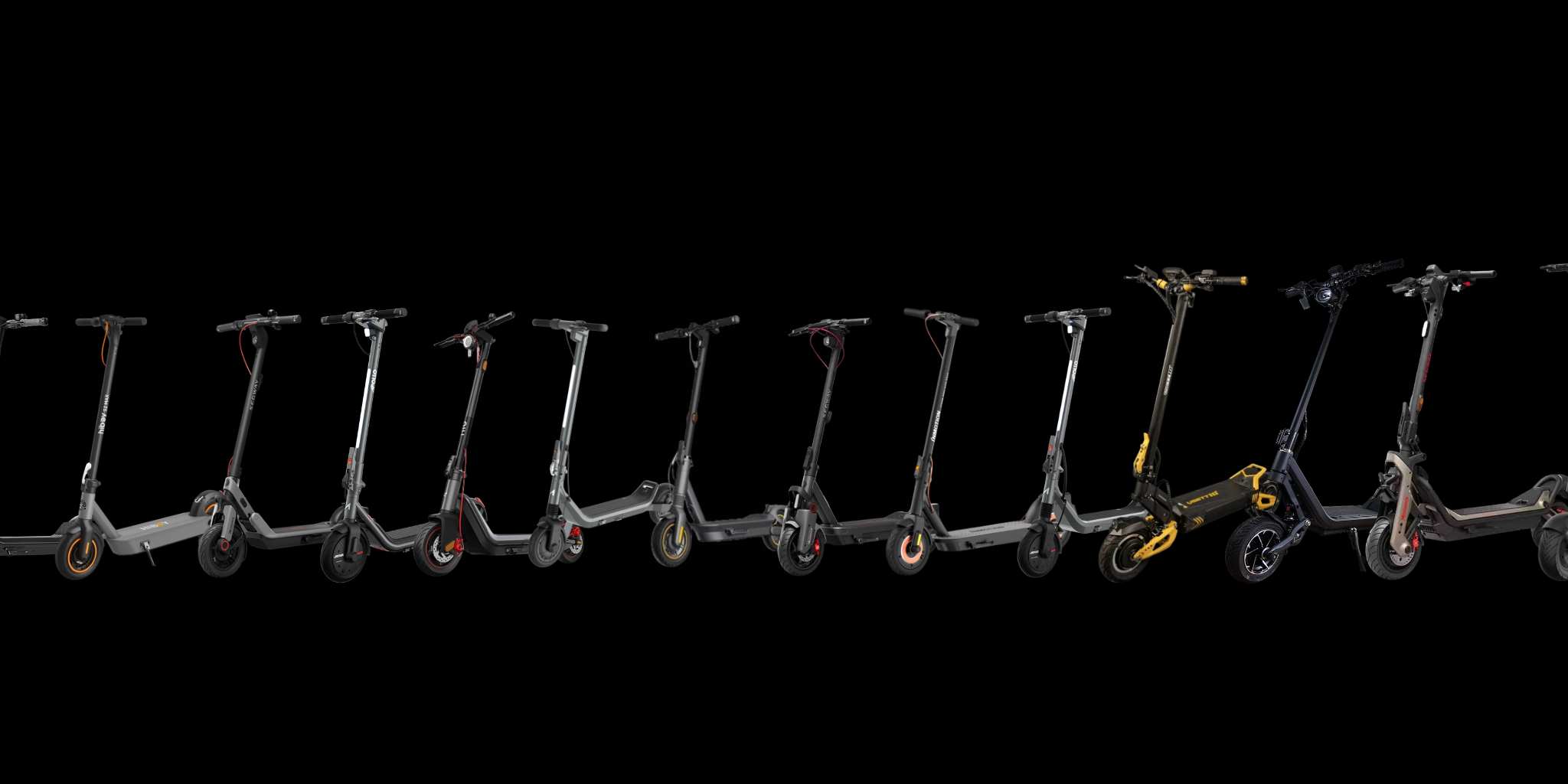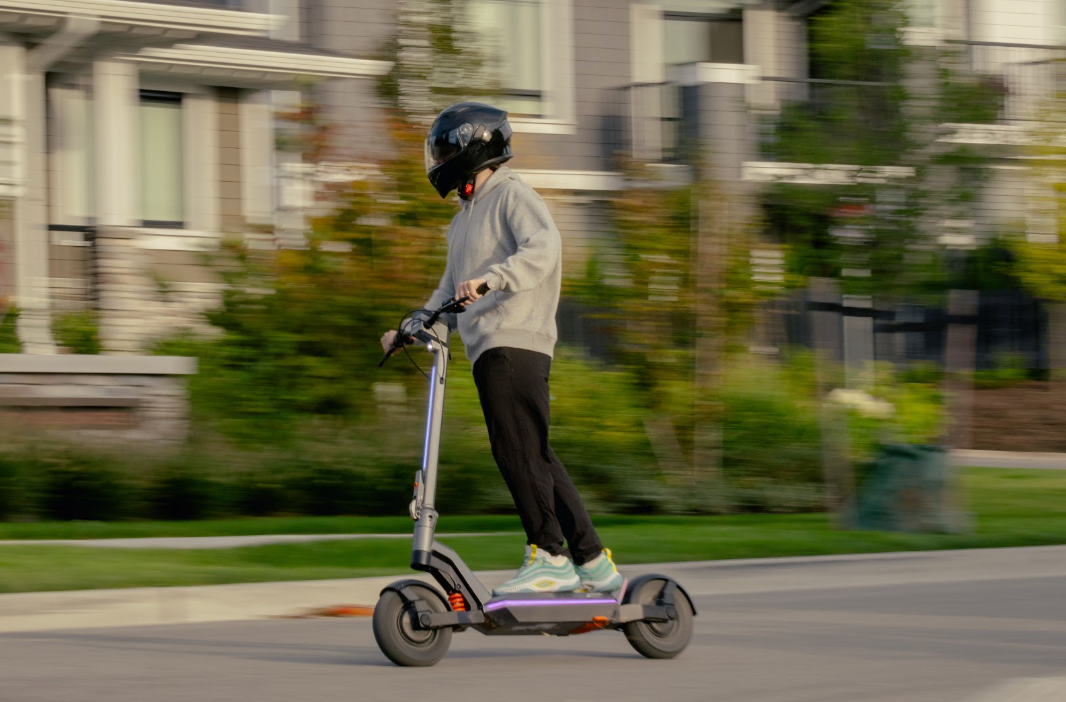




As cities grapple with traffic congestion, long commute times, air pollution, and lack of road infrastructure to keep up with ever-growing populations, the push for sustainable transport has made e-scooters emerge as a popular micromobility solution. Cities have introduced shared fleets from companies like Bird, Lime, Spin, and Neuron, and personal electric scooters have gained significant popularity in the past 10 years.
However, one of the main and persistent challenges to e-scooter ownership is charging, especially for those who are managing shared fleets of hundreds of electric scooters. The traditional plug-in methods are cumbersome and slow.
Wireless charging is now being explored, promising to eliminate cables, reduce down time, and streamline operational costs. While this is already a popular technology used in smart phones, smart watches, wireless earbuds, electric toothbrushes, and many other small devices, technological advancements and their use in high voltage and high current applications ( including e-scooters) are now being piloted, suggesting that this may soon be incorporated into future electric scooter models.
What is Wireless Charging?
The terms cordless and wireless charging, also known more formally as inductive charging, describes the ability to transfer power from one device to another, without the use of a direct physical connection like a cable, but by having the transmitting and receiving device be in close proximity to each other.
How Does Inductive Charging Work?
The process begins with a transmitter coil – loops of copper wire in the charging pad.
The device that receives the charge has a similar receiver coil, structured similarly to a transmitter coil.

When an alternating electrical current passes through the transmitter coil, it generates a magnetic field that also oscillates. When the receiver coil is placed in close proximity to the transmitter coil, it is affected by the magnetic field produced by it.
This oscillating magnetic field produces an alternating current (AC) on the receiver coil, meaning that the electrons in the receiver coil are being pushed back and forth at a high rate.
How Does Producing An Alternating Current Charge The Battery?
Since batteries can only be charged by direct current (DC), the receiving device must contain a bridge rectifier that will convert the AC current into DC. Here’s a simple diagram of what a bridge rectifier looks like:

The RL in the diagram can represent the battery.
The D#’s in the diagram indicate a diode that can only pass electrical current in ONE direction. So if the electrical current is coming from point A, and if you follow the directions that the diodes allow current to travel through, it can only pass through
-
A -> D1 -> D -> C -> D3 ->B
Likewise, if the electrical current is reversed, and is coming from point B, the electrical current passes through
-
B -> D4 -> D -> C -> D2 -> A
Note that in both circumstances, electrical current is passing in the same direction over RL by going from point D -> C, no matter which direction the alternating current is moving. This produces the DC required to charge a battery wirelessly.
There are additional components like capacitors that help smooth out DC output, and many modern systems include power management for safety and efficiency.
Factors That Affect Charging Efficiency
Cordless charging is always less efficient than wired charging. It has been shown that the efficiency of magnetic induction ranges from 60-80%. There are factors that affect its charging efficiency:
|
Conversion of Energy |
Each conversion step: |
|
Resistance Losses |
The transmitter and receiver coil are typically made of copper wire, and although copper is a good conductor of electricity, there is still some resistance in the copper wire. This electrical “friction” converts a small amount of that electrical energy into heat. |
|
Misalignment and Air Gaps |
When the transmitter and receiver coils are misaligned or are too far apart, the magnetic coupling becomes weak, which translates to a weaker electrical current on the receiver coil. |
Current Standards To Minimize Energy Loss
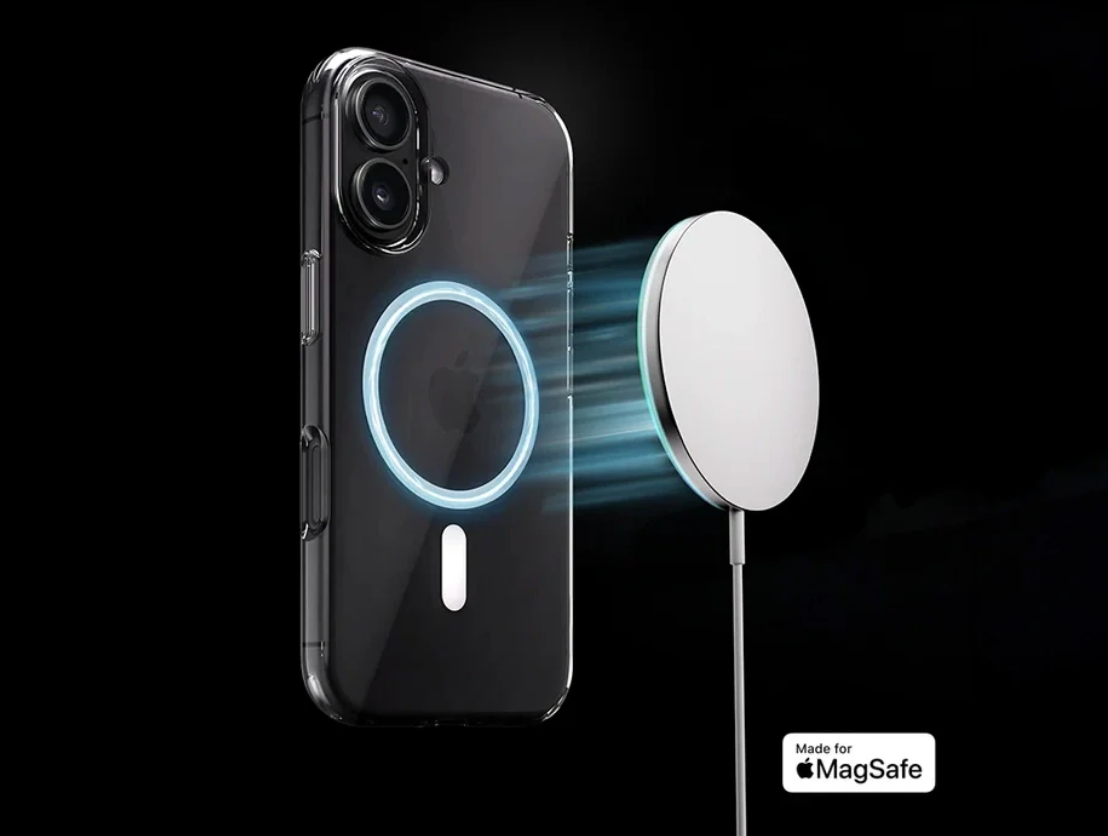
Evolving solutions such as Qi2 and Apple’s MagSafe use magnetic alignment rings to minimize misalignment, boosting efficiency and speed, while minimizing energy losses.

Magnetic resonance charging, while similar to inductive charging as this article has been discussing, uses coils that operate at near identical resonant frequencies. A good analogy is to think of tuning forks that are tuned to the exact same frequency. When one fork is struck, the sound vibration will cause the other fork to vibrate and produce a sound without touching. Likewise, when transmitter and receiver coils are “tuned” together, it significantly increases their magnetic coupling, which allows them to work together over larger distances and have a larger tolerance for misalignment compared to traditional inductive charging methods.
Current State: Wireless Charging For Electric Scooters
Since there is hardly any infrastructure available for wireless charging for e-scooters, Personal electric scooters largely lack any built-in wireless receivers, but shared fleets lead adoption. Here are a few wireless charging solutions that are currently available, though most solutions available right now are typically for shared fleets:

Meredot offer a wireless charging pad for electric scooters. However, either a scooter needs to be built with these wireless charging pads in mind, or they have to be modified or retrofitted with a wireless receiver in order to make use of these charging pads.
https://www.meredot.com/

MobiDock by Unplugged provides a complete parking solution for e-scooters and e-bikes by simply aligning your receiver pad against the transmitter pad.
https://www.unplugged.no/projects/powering-the-micro-mobility-revolution

Tiler builds its charging pad right into the ground, utilizing the kickstand as the receiver.
https://www.tilercharge.com/home
Advantages Of Wireless Charging
For shared fleets, wireless charging addresses high operational costs, which can be as high as up to 50% from charging logistics:
-
Reduces the need for “Juicers” or “Flyers” (an operations team that collects low-battery scooters via GPS for recharging).
-
Designated charging zones can reduce transportation time to bring low-battery scooters to the closest charging location.
-
Riders who return their scooter to these charging zones can help top up batteries while not in use.
-
Saves time without the need to fumble around with cables and charging ports, reducing overall wear with less physical interaction.
For personal riders:
-
Convenience - Reduces the need to physically plug and unplug the scooter.
-
Intuitive - Parking your scooter over a designated spot is easier than finding the correct adapter and plugging it into the correct port.
-
Durability - Reducing the use of physical connectors can enhance the life of your charging ports. Wireless charging is also generally weatherproof as no ports are exposed.
-
Lighter Payload - You won’t need to carry your power adapter around when you’re travelling in areas equipped for wireless charging.
Challenges and Considerations of Wireless Charging
While wireless charging capability on e-scooters is certainly convenient, there are many hurdles that remain to be addressed:
-
Significant investment on infrastructure: Charging pads still need to be built in strategic locations. For a commercial installation, they would likely need to be placed in the ground with sufficient protection against weather and traffic durability, all of which is costly for cities.
-
E-Scooters adoption: The vast majority of e-scooters today are not equipped with wireless receivers. Retrofits can be costly and will add additional weight to the scooter.
-
Security: Considering that e-scooters are already highly stolen, leaving your scooter in a publicly accessible designated charging area can leave your scooter vulnerable to thieves. This is already a significant concern, considering that, even when locked, scooters are still targeted by people who have the appropriate power tools. This may be less of a concern for shared scooters, which have alarms/GPS tracking.
-
Lower Efficiency: Depending on its implementation, one of the main challenges is to consider that the bottom of an e-scooter deck is typically 4 to 5 inches from the ground (and may be higher for higher-powered e-scooters). This air gap between the charging pad and the scooter deck (where the receiver coil would likely be placed) poses a significant challenge for a strong magnetic coupling. MobiDock and Tiler have products that could address the air gap issue.
-
Heat Generation: Loss of efficiency also means increased heat generation, which may pose additional risks, such as degrading the lifespan of the battery, or you may risk thermal runaway, where the battery gets into an accelerated, self-sustained chemical reaction that produces more heat as it heats up. Thermal runaway is the major reason why we see cheaper, unsafe, and non-certified batteries in e-bikes and e-scooters catch on fire.
-
Location Dependency: Due to the scooter’s dependency on charging pads, wireless charging will be limited to equipped locations, which is a lot less flexible than wired options.
-
Increased Weight: Dual wired/wireless support adds additional components, increasing the weight of the scooter, impacting its range and efficiency.
A Cord-Free Future for Micromobility
Wireless charging holds transformative potential for electric scooters, particularly in shared fleets where operational efficiency drives profitability. Pilots by Voi, Bumblebee, and others demonstrate feasibility, with advantages like reduced labor, enhanced durability, and seamless user experience outweighing current drawbacks in targeted applications.
For personal scooters, broader adoption depends on infrastructure scaling and tech maturation, much like how Qi/Qi2 mainstreamed phone wireless charging. Challenges such as charging efficiency, adoption, and security are significant but solveable, through innovative concepts that address air gaps and coil alignment, and smart city investments.
As micromobility evolves into a core urban transport pillar, wireless infrastructure and implementation could transform the way we charge - reducing downtime, emissions, and hassle. Cities embracing this now may lead the shift to sustainable, accessible mobility. The future isn't just electric - it's increasingly wireless.