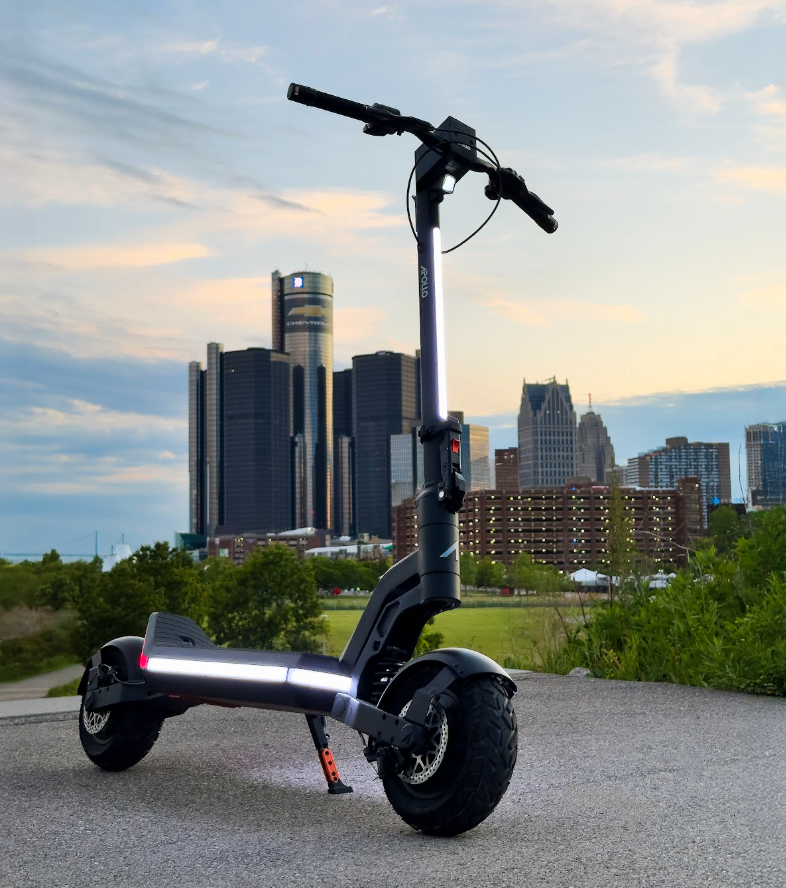




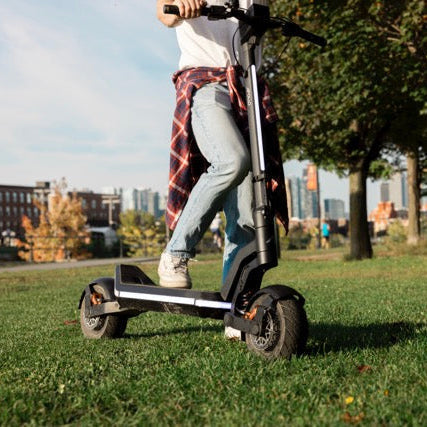
As the electric scooter industry continues to grow, 2025 brings a fresh wave of innovation — along with a few areas that haven’t changed as much as riders might have hoped.
Before diving into the year’s most exciting breakthroughs, it’s worth acknowledging the foundation everything is built on: the core design principles and components that remain consistent across most e-scooters. These fundamentals make today’s upgrades even more meaningful, pushing the industry forward while preserving what already works well.
Below, we break down the most important trends, technologies, and changes shaping e-scooters in 2025.
What has stayed the same in 2025?
Battery Innovations: Small Steps, Big Impact
While battery chemistry hasn’t undergone a major leap, manufacturers are making steady, practical improvements. Power density and weight ratios remain largely the same, but more scooters now use larger individual cells within their battery packs. This increases current capability, allowing:
-
Higher peak power
Faster charging times -
Better performance without added bulk
Lithium-ion remains the industry standard — still powerful, still efficient, and still associated with fire risks. However, improved battery management systems and smarter charging protocols have made these risks negligible in unmodified packs used with proper chargers.
Legislation: Slow Progress and Persistent Challenges
Regulations continue to lag behind technology:
-
UK: Private e-scooters remain illegal on public roads.
-
EU: Many countries still enforce strict motor wattage and speed limits that affect usability on hills or for heavier riders.
-
US: E-scooter laws vary widely across states and often remain more restrictive than e-bike rules.
A major issue is that many regions legislate hardware limitations instead of focusing on safe operation, holding back scooter adoption despite clear rider demands
Anti-Theft Tech: A Major Gap Still Unsolved
Despite growing demand, no manufacturer has fully solved scooter theft prevention.
-
The first Apollo Pro included IoT anti-theft tracking, but rising costs made it unsustainable, and the feature was removed in later models.
-
Some scooters now integrate Apple Find My, but it’s not universal and far from foolproof.
Theft remains one of the top rider concerns — and one of the biggest opportunities for innovation in the coming years.
Some things have changed more than others
Super Scooters got - more SUPER!
High-performance scooters have taken a significant leap in 2025. For the first time, multiple brands launched models capable of 50+ mph, pushing the boundaries of what’s considered a “consumer” scooter.
Apollo entered this segment with the Phantom 2 Stellar — a standout that delivers:
-
Ultra-refined control at low speeds
-
Confidence-inspiring handling.
-
The ability to ride comfortably at 5 mph or dominate the road at 50 mph
Major manufacturers like Segway, EMOVE, and Kaabo also released scooters reaching these speeds, making extreme performance more accessible than ever.

Safety: ABS, Better Tires, and Improved Suspension
Anti-lock and Anti-skid Braking Systems
More scooters now include ABS or anti-skid braking technologies that help riders maintain control during sudden stops or wet conditions.
Self-Healing Tubeless Tires Become the Standard
Self-healing tubeless tires are now common in mid- and high-end scooters and dramatically reduce flat risk.
Dual-Wheel Suspension
Better suspension isn’t just about comfort — it improves traction, stability, and overall rider safety by keeping wheels planted during bumps and uneven surfaces.
Connectivity: Apps Become Smarter and More Powerful
Scooter apps have evolved from “nice-to-have” companions to essential tools with meaningful functionality.
Across the industry we’re seeing:
-
Better customization controls
-
More ride data and telemetry
-
Smarter post-ride analytics
-
Social features on some platforms
The Apollo app remains a leader in this space, allowing riders to customize acceleration, regen braking, turn signal behavior, cruise control initiation, and more — while delivering detailed real-time data and shareable ride analytics.
Built-In Apple Find My Tracking
Many brands — including Apollo — now offer Find My integration on multiple current and upcoming models. This system uses nearby iPhones to relay location data, offering a simple, rider-friendly method of keeping track of a scooter’s whereabouts.
Lighting: A Big Leap in Visibility and Safety
Lighting systems have improved dramatically, with the Apollo Phantom 2 lineup setting a strong benchmark:
-
Bright, aimable headlights
-
Handlebar-end turn signals
-
Rear deck turn signals
-
Stem-mounted light bars
-
Incredibly bright side lighting
These features are now appearing in more affordable scooters like the Apollo Explore, helping make nighttime riding safer industry-wide.
Improved Weather Protection Becomes a Must-Have
Manufacturers are now treating weather resistance as a core requirement rather than an afterthought. Many modern scooters come with IPx5 and higher ratings, with Apollo’s lineup offering IP66 on most models. Just a few years ago, IP ratings were almost nonexistent — and now they’re becoming standard.

UL Certification Becomes Standard Practice
2025 marks widespread industry adoption of UL safety testing and certification, especially regarding fire safety. This is a huge step forward for rider trust and product reliability, and a sign of the industry’s maturation.
Prices Remain Stable Despite Global Trade Pressure
Despite tariffs and global supply challenges, scooter prices in 2025 have remained surprisingly stable. In many cases, riders are getting:
-
More features
-
Higher performance
-
Better safety systems
— all at prices similar to, or even lower than, 2024 models.
“Tech trickle-down” is alive and well in the e-scooter world.
The Road Ahead: What’s Next Beyond 2025
Has 2025 brought what we need, and not what we’ve [riders] asked for? At Apollo we constantly ask our riders what they want - they always seem to ask for more speed and more range for less money. One must ask at this point isn’t 50 mph on 11” wheels enough? Is your commute longer than 18 miles?
While scooter innovations may be technology driven, scooter evolution is largely customer driven. Given all that, in all likelihood, the “how fast, how far” wishes will certainly be granted for scooters at the top end of the market. Barring something revolutionary like new battery chemistry, we will likely see more of the same next year. AND…. this is a good thing. More safety, more usability, and more affordability with respect to needed features.
We should hope that the public’s disdain for kids recklessly riding e-bikes and scooters (but mostly e-bikes), will not result in more poorly crafted legislation that restricts scooters rather than requires reasonable operation by individuals of appropriate age and maturity.
We can hope for battery chemistry breakthroughs that will allow higher power densities and lower weights, making scooters lighter, smaller, and easier to live with.
We should hope that anti-theft technologies are applied to scooters enough to impact the theft problem.
Modern electric scooters are still a relatively young product category. Every year is an exciting one, bringing new models and new - or more advanced - features for our enjoyment. We should all look forward to an exciting 2026!